

In an era where digital screens dominate our visual landscape, a curious resurgence of the surreal has taken root—not in the flickering pixels of a computer, but in the tactile, textured realm of analog collage. The dreamer, that enigmatic figure who wanders the liminal spaces between reality and reverie, has returned with a vengeance. No longer confined to the margins of art history, surrealist artists today are reimagining the medium, blending nostalgia with innovation to craft works that feel both ancient and futuristic. This revival isn’t merely a stylistic choice; it’s a rebellion against the sterile perfection of digital art, a reclaiming of the handmade, the imperfect, the uncanny. But why now? What deeper currents are drawing us back to these dreamlike visions?
Perhaps it’s the collective exhaustion with the hyper-rational world we’ve built—a world of algorithms, efficiency, and curated perfection. In such a landscape, the surreal offers an escape, a portal to the subconscious where logic bends and emotions run wild. It’s no coincidence that the most compelling surrealist artists today are those who don’t just mimic the past but interrogate its shadows, revealing truths too strange for daylight. From the eerie stillness of a collage’s layered fragments to the disorienting play of scale and perspective, these works don’t just depict dreams—they invite us to inhabit them.
The Alchemy of Collage: Where Fragments Become Truth
Collage, at its core, is an act of rebellion. It dismantles the illusion of a single, coherent narrative and replaces it with a mosaic of possibilities. The surrealist artists of today understand this implicitly. They don’t just cut and paste; they transmute. A torn magazine clipping of a face might become the eye of a clock, its hands frozen in a moment of existential dread. A scrap of fabric could unravel into the tendrils of a dream, coiling around the edges of reality. This isn’t mere juxtaposition—it’s alchemy, turning the mundane into the mythic.
Consider the work of those who work in analog, their studios cluttered with vintage postcards, yellowed photographs, and fragments of forgotten texts. Each piece is a relic, a whisper from another time, and when assembled, they form something entirely new—a visual incantation that feels both familiar and alien. The process itself is a form of divination. The artist doesn’t control the outcome; they surrender to the serendipity of the materials, allowing the subconscious to guide their hands. In a world where everything is optimized, this surrender is radical.
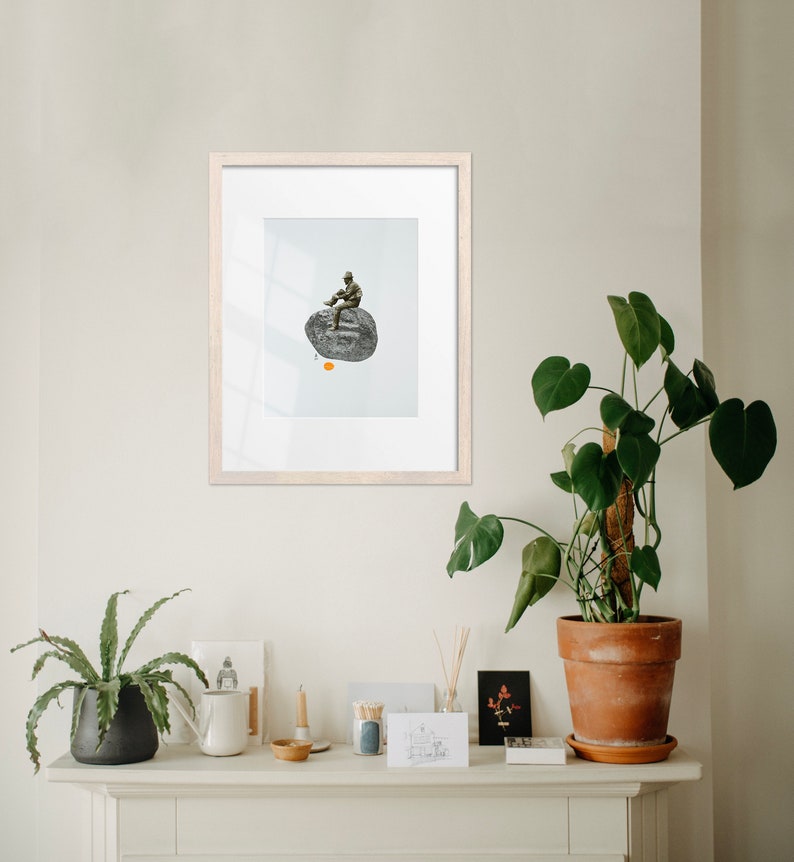
The tactile nature of analog collage also plays a crucial role in its resurgence. In an age of swipes and clicks, the physicality of tearing, gluing, and layering becomes a meditative act. The artist’s touch is visible, imprinted in the uneven edges and overlapping textures. This imperfection is not a flaw but a feature—it’s the evidence of a human hand at work, a counterpoint to the cold precision of digital tools. The viewer, in turn, is drawn into this intimacy, invited to trace the lines of a collage with their eyes, as if reading the lines of a palm.
The Uncanny in the Everyday: Surrealism’s Subversive Power
Surrealism has always thrived on the uncanny—the moment when the familiar becomes unsettling. Today’s artists wield this power with surgical precision, plucking objects and images from the everyday and recontextualizing them until they hum with latent meaning. A teacup might float above a cityscape, its contents spilling into the sky like liquid starlight. A pair of shoes could stretch into the distance, their laces morphing into vines that strangle the pavement. These aren’t just visual tricks; they’re metaphors for the disorientation of modern life.
The surrealist gaze exposes the absurdity lurking beneath the surface of the mundane. A grocery store receipt, when viewed through this lens, could become a prophecy. A child’s drawing, when magnified and distorted, might reveal the face of a forgotten god. This isn’t escapism—it’s a form of resistance. By forcing us to see the world anew, surrealist artists remind us that reality is not a fixed thing but a malleable construct, shaped by our perceptions and fears.
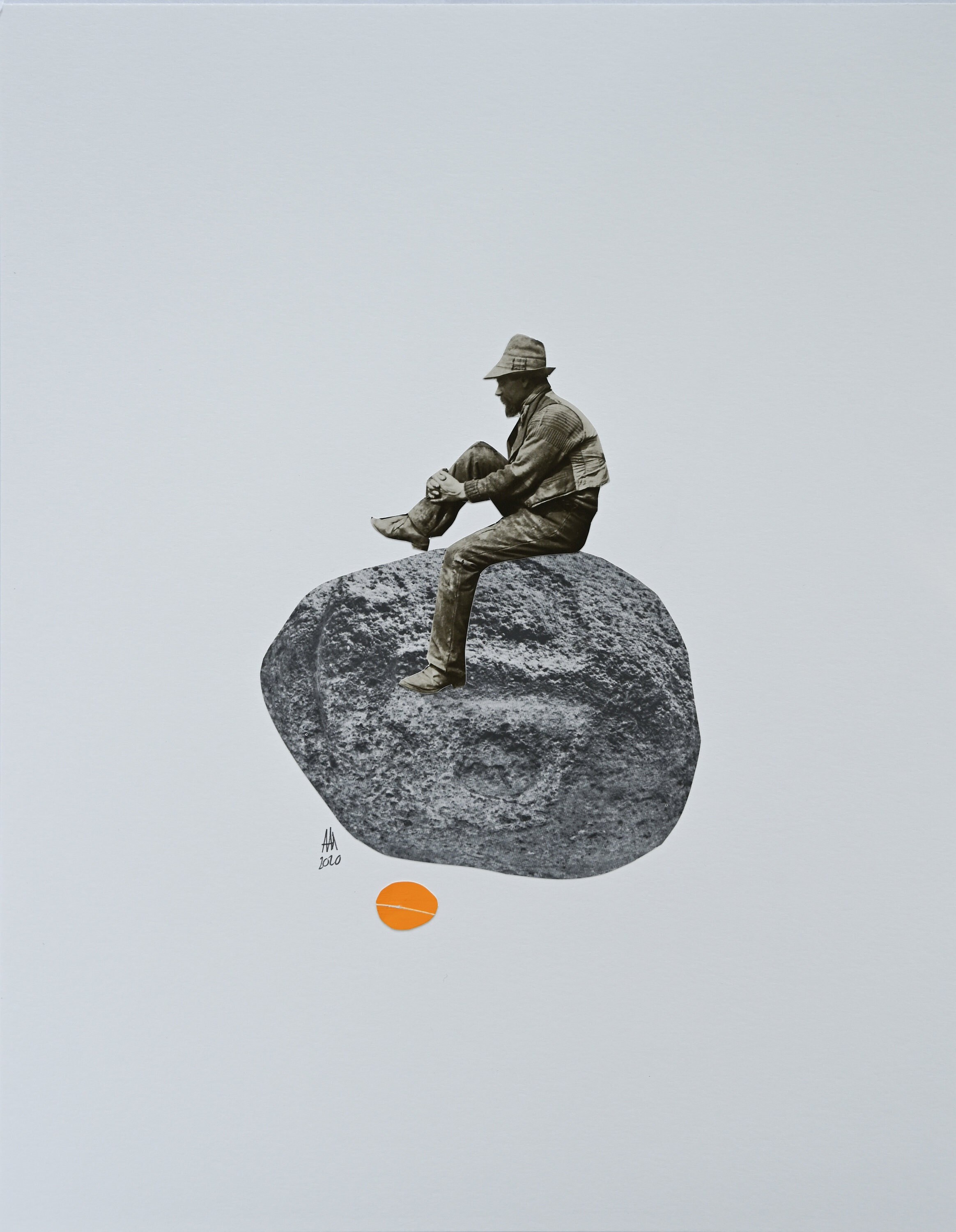
Take, for example, the way contemporary artists play with scale. A tiny figure might loom over a vast, empty landscape, their presence both monumental and insignificant. Or a single object—a key, a door, a window—could become a portal to another dimension, its scale warping to suggest infinite possibility. These distortions aren’t just stylistic choices; they reflect our own psychological landscapes, where anxieties and desires stretch reality to its breaking point.

The uncanny also thrives in the interplay between the organic and the artificial. A collage might juxtapose a human hand with a mechanical appendage, or a landscape with the skeletal remains of a building. These collisions create a sense of unease, a reminder that our bodies and our creations are not as separate as we’d like to believe. In this way, surrealism becomes a tool for exploring the boundaries between self and other, human and machine, life and decay.
The Digital Paradox: Why Analog Surrealism Endures
It’s ironic, perhaps, that in an age dominated by digital tools, the most compelling surrealist art is being made by hand. But this paradox speaks to a deeper truth: the more we are surrounded by the virtual, the more we crave the tangible. Digital art, for all its precision, often lacks the soul of the handmade. It’s crisp, clean, and controlled—a reflection of the algorithmic world that produced it. Analog surrealism, by contrast, is messy, unpredictable, and alive with the artist’s presence.
This isn’t to say that digital tools aren’t used by surrealist artists today. Many embrace a hybrid approach, blending traditional techniques with digital manipulation to create works that feel both ancient and cutting-edge. But even in these cases, the hand of the artist is evident. The digital brushstrokes mimic the organic texture of paint, or the collage elements retain the frayed edges of torn paper. The result is a visual language that feels both timeless and urgently contemporary.
The resurgence of analog surrealism also speaks to a growing disillusionment with the ephemeral nature of digital art. A digital file can be deleted with a click; a collage, once made, endures. It can be held, framed, and passed down through generations. In a world where everything is transient, the permanence of analog art becomes a quiet act of defiance. It’s a way of saying: this matters. This is real.
Moreover, the act of creating analog surrealist art is a form of rebellion against the passive consumption of digital content. Scrolling through an endless feed of images is a one-way transaction; making art is an act of creation, of engagement. It requires patience, focus, and a willingness to embrace the unknown. In a culture that rewards instant gratification, this is no small feat.
The Dreamers Among Us: Artists to Watch
While the surrealist tradition stretches back to the early 20th century, today’s practitioners are carving out their own niches, pushing the boundaries of the medium in unexpected ways. One such artist reimagines vintage postcards as portals to other worlds, their edges frayed and their colors faded, as if plucked from a dream half-remembered. Another constructs intricate dioramas from found objects, each piece a miniature universe where time and space bend to the artist’s will. These artists aren’t just making art—they’re crafting experiences, inviting viewers to lose themselves in the labyrinth of their imaginations.
Some artists draw inspiration from the natural world, transforming leaves, flowers, and bones into surrealist tableaux. Others mine the detritus of consumer culture, repurposing packaging, advertisements, and discarded ephemera into haunting visual poetry. What unites them is a shared belief in the power of the image to transcend the ordinary, to become something more—a mirror, a window, a door.
Among the most exciting voices in contemporary surrealism is a collective of artists who work collaboratively, their pieces evolving through a process of exchange and improvisation. Their work feels alive, as if it’s constantly shifting and growing, a living dream shared between multiple minds. This collaborative approach harks back to the early days of surrealism, when artists like André Breton and Max Ernst engaged in playful, experimental exchanges. Today, these digital-age dreamers are proving that the spirit of surrealism is far from dead—it’s evolving, adapting, and thriving in unexpected corners.
The Deeper Pull: Why Surrealism Resonates Now
To understand why surrealism is experiencing such a vibrant resurgence, we must look beyond the art itself and into the cultural moment that produced it. We live in an era of unprecedented uncertainty—a time when the certainties of the past have crumbled, and the future feels both exhilarating and terrifying. Climate change, political upheaval, and the relentless march of technology have left many of us adrift, searching for meaning in a world that often feels like a waking dream.
Surrealism offers a way out of this disorientation. By embracing the irrational, the illogical, and the uncanny, it gives form to the anxieties and desires that lurk beneath the surface of our conscious minds. It’s a language for the inexpressible, a way to articulate the inarticulate. In a world that demands clarity and precision, surrealism reminds us that ambiguity is not a flaw but a feature—a necessary part of the human experience.
There’s also something deeply comforting about the surrealist gaze. It doesn’t offer easy answers or tidy resolutions. Instead, it embraces the mystery, the ambiguity, the unresolved. In a culture that often prioritizes efficiency and productivity, surrealism is a rebellion—a celebration of the meandering, the meandering, the meandering. It’s a reminder that not everything needs to be explained, that some things are best left to the imagination.
For those who feel overwhelmed by the relentless pace of modern life, surrealist art offers a sanctuary. It’s a place where time slows down, where the rules of logic bend and twist, and where the impossible becomes possible. It’s a reminder that the world is not as rigid as it seems—that beneath the surface of the ordinary, there’s a vast, uncharted territory waiting to be explored.
In the end, the return of the dreamer is not just a stylistic trend; it’s a cultural reckoning. It’s a sign that we’re hungry for art that doesn’t just reflect the world as it is, but reimagines it as it could be. It’s a call to embrace the strange, the beautiful, and the unsettling—to see the world not as it appears, but as it feels. And in doing so, we might just find that the most profound truths are the ones that can’t be spoken, only dreamed.


Leave a Comment