

Have you ever stood in your workshop, ruler in hand, squinting at a piece of wood like it’s about to reveal the secrets of the universe? You’ve measured twice. You’ve double-checked. You’ve even whispered the sacred mantra: “Measure twice, cut once.” And yet, somehow, the blade still veers off course. What if I told you that the adage itself is a well-intentioned lie? What if the real secret isn’t in the measuring—but in the marking? Welcome to the counterintuitive truth: It’s not “measure twice, cut once.” It’s “mark once, cut once.”
This isn’t heresy. It’s evolution. The old saying assumes precision lives in repetition, but precision thrives in clarity. Measuring is a ritual of verification. Marking is an act of creation. One tells you where you are. The other tells you where you’re going. And in the world of craftsmanship, where every millimeter whispers, the difference between a masterpiece and a mistake isn’t in the counting—it’s in the drawing.
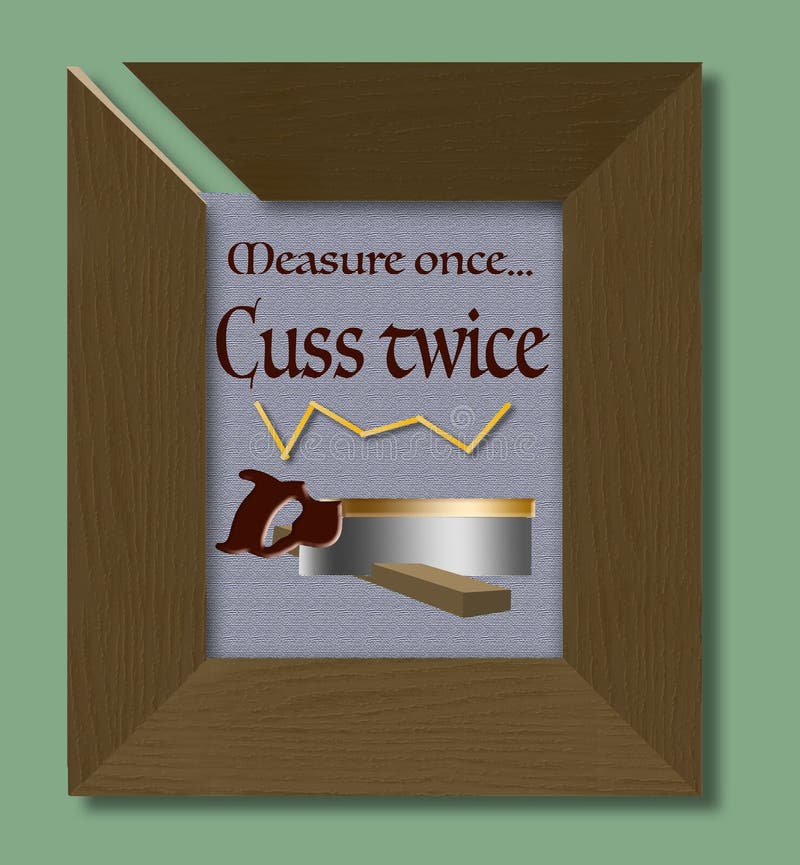
The Myth of Measurement: Why Numbers Lie to You
Numbers are cold. They don’t care about grain direction. They don’t whisper about knots or hum with the resonance of seasoned timber. They just are. When you measure twice, you’re trusting a system that’s inherently flawed—because your eyes, your hands, and even your tape measure are all subject to the same human imperfections. Parallax errors, tape stretch, and even the angle of your gaze can skew your readings by millimeters. And in woodworking, millimeters are the difference between a snug joint and a gaping chasm.
Consider this: you measure a board to 24 inches. You measure again. It’s still 24 inches. But when you place your square and draw the line, the pencil tip isn’t perfectly aligned with the zero mark. It’s a fraction off. That fraction compounds when you move to the saw. Suddenly, your “perfect” 24-inch board is now 23 ¾ inches. And you’ve just turned a precision project into a puzzle with missing pieces.
Measurement is verification, not creation. It’s the cartographer’s art—charting territory you’ve already claimed. But in craft, you’re not just navigating land. You’re shaping it. And to shape it well, you need a map that’s drawn in ink, not pencil.
From Metrics to Marks: The Power of Deliberate Marking
Marking isn’t just writing down a number. It’s an act of translation. You take the abstract data of measurement and convert it into a physical, visual command. A mark is a promise. It’s the moment where data becomes destiny. When you mark your cut line with a sharp pencil, a marking knife, or even a scribe, you’re not just recording a dimension—you’re declaring an intention. And intention, in the hands of a craftsman, is everything.
Imagine this: you’re cutting a dovetail joint. You measure the thickness of your board. You mark it. You measure again. You mark it again. But instead of relying solely on the numbers, you use a marking gauge to scribe a thin, crisp line along the entire edge. That line isn’t just a guide—it’s a boundary. It’s the edge of your craft. When you place your saw against that line, you’re not cutting to a number. You’re cutting to a story. The line tells the saw where to stop before the wood even knows it’s being cut.

And here’s the secret no one tells you: marks are forgiving. A pencil line can be adjusted. A knife cut can be refined. But a saw cut? Once it’s made, it’s final. So why waste time measuring twice when you can mark once—and cut with confidence?
The Ritual of the Mark: How to Do It Right
Marking isn’t a step. It’s a ritual. And like all rituals, it demands respect, focus, and the right tools. Here’s how to elevate your marking from mundane to magnificent:
Choose Your Weapon Wisely. Not all marks are created equal. A dull pencil leaves a smudge. A soft pencil smears. A marking knife? That’s precision incarnate. It cuts a line so fine, it’s almost invisible—until the saw follows it like a faithful hound. For rough work, a carpenter’s pencil is fine. But for joinery, furniture, or anything that demands perfection, invest in a marking knife and a straightedge.
Let the Mark Lead. Place your square against the wood. Align it with your measurement. But don’t just mark the edge—mark the entire face. A single dot is a suggestion. A continuous line is a command. Run your pencil or knife along the edge of the square, from one end of the board to the other. That line is now your contract with the wood.
Use Light as Your Guide. Hold your work up to the light. If the mark isn’t crisp, if it’s fuzzy or uneven, it’s not ready. Re-mark. A good mark should cast a shadow when held at an angle. That shadow is your preview of the cut.
Trust the Mark, Not the Measure. Once the line is drawn, step back. Look at it. Does it feel right? Does it align with your vision? If not, adjust the mark—not the measurement. The mark is your interface with the material. If it’s off, the cut will be off. But if the mark is true, the cut will follow.
This isn’t just technique. It’s philosophy. It’s the difference between a craftsman who fights the wood and one who dances with it.
When Measurement Still Matters: The Exceptions That Prove the Rule
Of course, there are moments when measurement is non-negotiable. When building a cabinet with multiple identical parts, for instance, consistency is king. You need every shelf to be the same width. You need every drawer front to align. In those cases, measurement is your anchor. But even then, the measurement isn’t the final word. It’s the starting point for the mark.
Think of it like this: you’re baking a cake. The recipe calls for 2 cups of flour. You measure it twice. You level it off. But when you pour it into the bowl, you don’t just dump it in blindly. You watch. You adjust. You ensure the flour integrates smoothly with the other ingredients. Measurement sets the stage. Marking directs the performance.
And in the world of digital fabrication—where CNC machines and laser cutters rule—the same principle applies. The machine doesn’t measure twice. It reads a file. It follows a path. The path is the mark. The machine is the saw. The only difference is, the machine doesn’t second-guess itself.
The Psychological Edge: Confidence Over Calculation
There’s one more reason marking trumps measuring: psychology. When you measure twice, you’re reinforcing doubt. Each measurement becomes a test of your own fallibility. “Did I get it right? Am I sure?” That doubt seeps into your hands. It makes you hesitant. And hesitation is the enemy of precision.
But when you mark once, you’re making a declaration. “This is where I cut. This is where I create.” There’s no room for second-guessing. The mark is your anchor. It’s the moment you commit. And commitment, in craft, is everything.
I’ve seen it time and again. A beginner measures twice, cuts once, and still misses. A master marks once, cuts once, and nails it. Not because the master is more skilled—but because the master trusts the mark more than the measurement.
Conclusion: The Cutting Edge of Craftsmanship
So the next time you stand in your workshop, ruler in hand, ask yourself: Am I measuring to be sure, or am I marking to create? The answer will change everything.
Measurements are the echoes of your doubts. Marks are the whispers of your intent. And in the end, it’s not the number that guides the blade—it’s the line.
Now go. Mark. Cut. Create. And let the wood tell its own story.


Leave a Comment