

In the heart of Africa, where the earth still hums with the whispers of ancient drummers, there exists a rhythm so profound it doesn’t just move the body—it awakens the soul. This is the secret of polyrhythm, a musical phenomenon where multiple rhythms interlock like the gears of a celestial machine, each layer spinning independently yet harmonizing into a single, transcendent pulse. Here, your feet don’t just tap—they sing, while your hips sway in a silent, reverent prayer. It’s not just music; it’s a conversation between the body and the cosmos, a dialogue where every beat is a word, every pause a breath of the divine.
Polyrhythm is the heartbeat of Africa, a rhythmic tapestry woven from the threads of tradition, innovation, and communal ecstasy. It’s the reason a single drum circle can make the ground tremble and the spirit soar. To understand its allure, we must first unravel its layers—not just as a musical technique, but as a living, breathing philosophy that transforms movement into meditation and sound into sacred geometry.
The Alchemy of Time: How Polyrhythm Bends the Fabric of Rhythm
At its core, polyrhythm is the art of layering rhythms that exist in different time signatures simultaneously. Imagine a drummer playing in 4/4 time while another locks into 6/8, their beats weaving through each other like vines in a jungle. This isn’t just complexity for complexity’s sake—it’s a rebellion against the rigid, linear march of Western rhythm. In Africa, time isn’t a straight line; it’s a spiral, a circle, a living loop where past, present, and future coexist in the same breath.
The magic lies in the interlock. When a rhythm in 3/4 time meets one in 4/4, the listener doesn’t hear two separate patterns—they experience a third, emergent rhythm, a ghost pulse that emerges from the friction of the two. It’s like watching two dancers in a mirrored ballroom, their movements out of sync yet creating a third, hypnotic dance. This is the polyrhythmic paradox: simplicity in complexity, chaos in harmony.
Consider the clave, the rhythmic key that unlocks so much of African music. In 2/3 or 3/2 time, it’s a deceptively simple pattern—two beats against three—that serves as the foundation for everything from Cuban son to West African drumming. But here’s the secret: the clave isn’t just a rhythm. It’s a philosophy. It teaches that even the smallest unit of time can contain multitudes, that a single beat can hold the weight of an entire universe.
The Body as Instrument: Why Polyrhythm Feels Like a Religious Experience
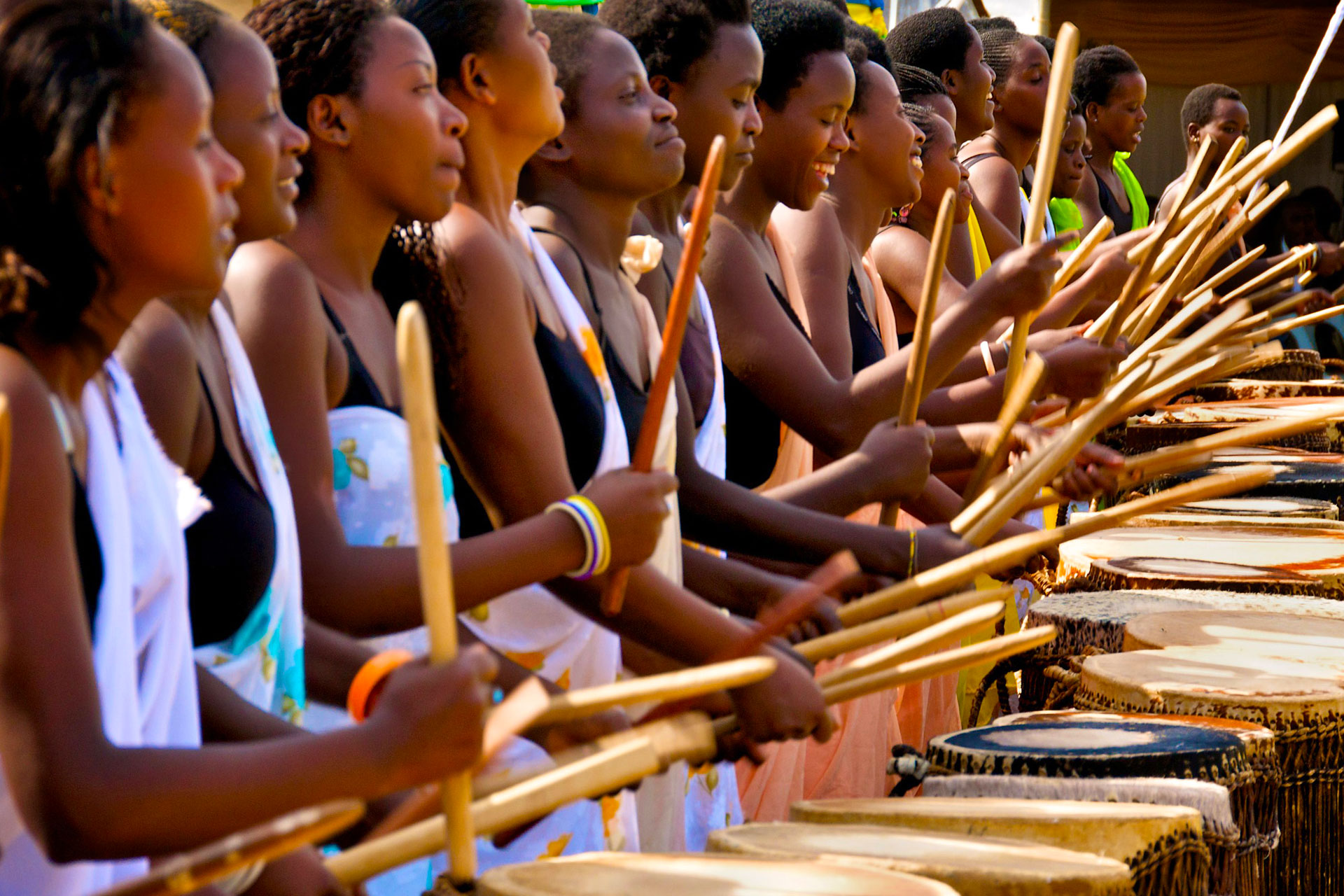
Polyrhythm isn’t just heard—it’s felt. It’s the reason why, when you listen to a master drummer, your feet start moving before your brain even registers the beat. It’s the reason why, in a drum circle, strangers become kin in the span of a single rhythm. The body doesn’t just respond to polyrhythm; it becomes it.
Think of the way your hips sway when a djembe’s deep bass resonates through your chest. That’s not just physical reaction—that’s your body syncing with the earth’s pulse. In many African traditions, polyrhythm is tied to spiritual practices, where dance isn’t just movement but a form of prayer. The orisha in Yoruba tradition, for example, are invoked through specific drum patterns, each rhythm a direct line to the divine. Here, the dancer isn’t just moving; they’re communing.
And then there’s the syncopation—the art of placing accents where they’re least expected. It’s the musical equivalent of a magician’s sleight of hand, where the listener’s expectations are constantly subverted, only to be rewarded with a deeper, more intoxicating groove. When your feet “sing” in polyrhythm, they’re not just keeping time—they’re playing with it, teasing it, bending it to their will.

The Geometry of Groove: How Polyrhythm Creates Sonic Mandalas
If you’ve ever stared at a kaleidoscope and watched the patterns shift and multiply, you’ve glimpsed the visual counterpart to polyrhythm. Each rhythm is a line, each interlock a point of intersection, and the result is a fractal of sound—a sonic mandala where every note is a petal, every pause a gap in the symmetry.
This geometric beauty is no accident. African polyrhythm is deeply tied to the concept of ubuntu—the idea that “I am because we are.” Just as no single line can create a mandala, no single rhythm can create polyrhythm. It requires collaboration, trust, and an almost mathematical precision in the chaos. The talking drum, for instance, mimics the tonal inflections of human speech, turning rhythm into a language where every strike is a syllable, every pause a breath.
Consider the agbadza rhythm of Ghana’s Ewe people. It’s built on a 4/4 foundation, but layered atop it are rhythms in 6/8 and 12/8, creating a shimmering, ever-shifting tapestry. The listener doesn’t just hear it—they see it, as if the sound has taken physical form, a spiral of notes spinning outward from a central pulse. It’s why polyrhythm feels like a living thing, a creature with a mind of its own, growing and evolving with each repetition.

The Modern Alchemist: Polyrhythm in Contemporary Music
Polyrhythm isn’t a relic of the past—it’s a living, breathing force that continues to shape music today. From the afrobeat of Fela Kuti, where jazz harmonies collide with Yoruba rhythms, to the post-rock of bands like Tortoise, which weave polyrhythmic complexity into instrumental suites, the spirit of Africa’s rhythmic genius is everywhere.
Even in genres you wouldn’t expect, polyrhythm lurks beneath the surface. Take jazz—Miles Davis’ Bitches Brew wouldn’t exist without the polyrhythmic interplay of Tony Williams’ drums and John McLaughlin’s guitar. Or hip-hop, where producers like J Dilla and Flying Lotus use off-kilter rhythms to create beats that feel like they’re stuttering, skipping, and leaping all at once. It’s the same magic, just repackaged for a new era.
And then there’s the world music movement, where artists like Tinariwen and Bombino blend Tuareg rhythms with electric guitars, creating a sound that’s both ancient and futuristic. Here, polyrhythm isn’t just a technique—it’s a bridge between cultures, a way to honor tradition while forging something entirely new.
The Ritual of Rhythm: Why Polyrhythm Will Never Die
In a world that moves faster than ever, where algorithms dictate our attention spans and our lives are measured in likes and shares, polyrhythm offers something rare: a return to the present moment. It’s a reminder that time isn’t something to be conquered—it’s something to be danced with.
Polyrhythm teaches us that complexity isn’t the enemy of beauty. That chaos can be a form of order. That the body and the mind don’t have to be at war—they can move in perfect, hypnotic unison. It’s why, when you hear a polyrhythmic pattern for the first time, your soul recognizes it instantly, as if it’s been waiting for this rhythm your whole life.
So the next time you hear a drum circle, don’t just listen—feel. Let your feet sing. Let your hips pray. Let the rhythms weave through you like a spell, a secret language that connects you to something older, deeper, and far more alive than the world of playlists and streaming services. Because polyrhythm isn’t just music. It’s a conversation with the universe, and it’s waiting for you to join in.


Leave a Comment