

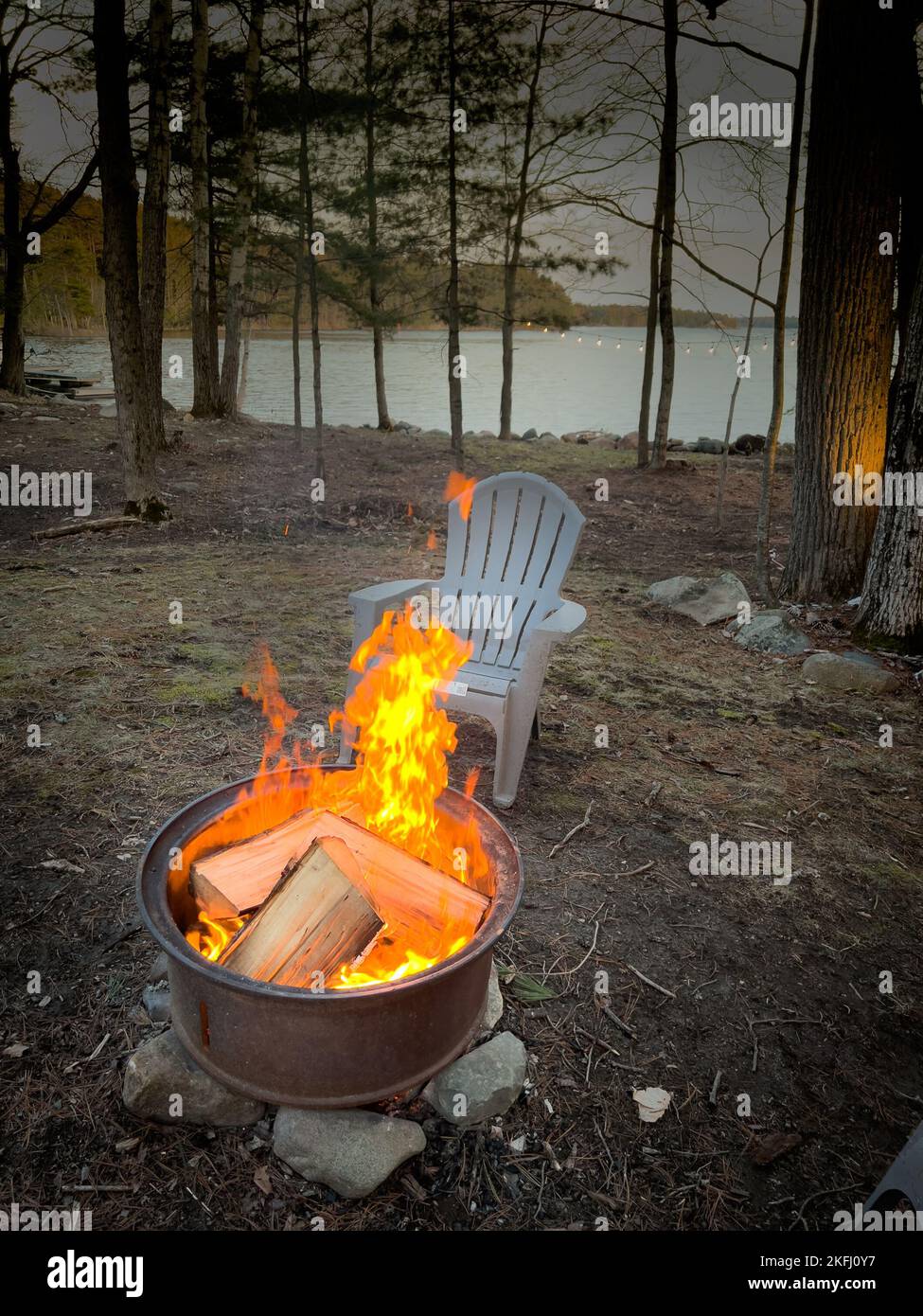
Have you ever sat by a crackling campfire, watching the flames dance like mischievous spirits, only to glance at the empty chair beside you and wonder—what if that chair could bend to your will? Not in some arcane ritual, but through the primal alchemy of steam and heat? Welcome to the Steam-Bending a Chair Back Over a Campfire Challenge, where raw nature meets human ingenuity in a test of patience, skill, and sheer audacity.
This isn’t just about shaping wood; it’s about bending the very rules of what wood can do. Most of us see a chair as a static object, a thing of fixed angles and rigid lines. But what if you could coax it into a graceful arc, as if it were a willow branch swaying in the wind? That’s the allure of steam-bending—a technique as old as shipbuilding and as poetic as a blacksmith’s hammer. And when you do it over a campfire? Suddenly, the challenge becomes more than technical; it becomes an adventure.
The Allure of Steam-Bending: Why Bother?
At its core, steam-bending is the art of softening wood fibers with heat and moisture, allowing them to flex without snapping. It’s a process that turns rigid timber into pliable ribbons, ready to be molded into curves that defy convention. But why choose this over traditional carving or laminating? The answer lies in elegance and efficiency. A steam-bent chair back isn’t just functional; it’s a sculpture, a testament to the harmony between material and maker.
Consider the alternatives: carving a chair back from a solid block of wood is labor-intensive, wasteful, and often leaves you with a piece that’s more blocky than graceful. Laminating, while effective, requires precise glue application and clamping—tools that aren’t always at hand in the wilderness. Steam-bending, however, demands little more than a fire, a pot of water, and a stubborn will to experiment. It’s the kind of challenge that turns a simple camping trip into a masterclass in primitive craftsmanship.
And let’s not forget the drama of it all. There’s something thrilling about watching a straight piece of wood transform under your hands, its edges softening as if melting into a new form. It’s like witnessing a caterpillar emerge from its chrysalis—except here, the chrysalis is a campfire, and the butterfly is a chair that cradles your back like a lover’s embrace.
The Campfire as Your Workshop: Tools and Tactics
Before you can bend wood, you need to bend the rules—or at least, the wood. The campfire becomes your forge, your kiln, your entire workshop condensed into a ring of stones and flickering embers. But not all fires are created equal. For steam-bending, you’ll want a fire that’s hot enough to boil water but not so fierce that it scorches your workpiece before you’ve even begun.
Start with a sturdy, green wood—species like oak, ash, or hickory are ideal because their fibers are still supple. Avoid dry or seasoned wood; it’s too brittle and will snap like a twig under pressure. Once you’ve selected your material, you’ll need a way to channel steam directly to the wood. This is where improvisation becomes your best friend. A length of copper tubing, a repurposed coffee can, or even a hollowed-out log can serve as your steam conduit. The key is to create a sealed system where the wood is enveloped in a cloud of scalding vapor, coaxing its fibers into submission.

Timing is everything. Too little steam, and the wood resists; too much, and it weakens beyond repair. Aim for a steady, prolonged exposure—anywhere from 20 minutes to an hour, depending on the thickness of your wood. And don’t forget to rotate the piece occasionally, ensuring even heating. The goal isn’t to cook the wood but to awaken it, to coax it into a state where it’s pliable enough to hold a new shape without rebelling.
The Moment of Truth: Bending Without Breaking
Here’s where the real test begins. Armed with your steamed wood and a vision of the chair back you want to create, you’ll need to act fast. The wood’s pliability is fleeting—once it cools, it hardens into its new form, for better or worse. This is where your campfire setup becomes a stage, and you, the director of a very literal woodworking drama.
Start by securing one end of the wood in a clamp or between two sturdy logs. Then, gently apply pressure to the other end, guiding it into the curve you desire. Resist the urge to force it; steam-bending is a dance, not a wrestling match. If the wood protests with a sharp crack, you’ve pushed too far. Back off, reheat if necessary, and try again with a gentler touch.
It’s easy to get caught up in the mechanics of the bend, but don’t overlook the artistry of it. The curve you create should feel intuitive, almost like it was always meant to be that way. Think of the chair back as a question posed to the wood: “How would you like to support someone’s back?” The answer, if you’ve done it right, will be a shape that’s both functional and beautiful—a silent conversation between you and the material.
And what if it fails? That’s part of the challenge. Not every attempt will yield a masterpiece, and that’s okay. Some of the most iconic pieces of furniture in history were born from trial and error. The key is to learn from each misstep, to refine your technique with every charred scrap of wood left in your wake.
The Aftermath: From Campfire to Comfort
Once your chair back has cooled and set into its new form, the real work begins: refining it. Sanding away the rough edges, smoothing out any stubborn fibers that resisted the bend, and perhaps even adding a coat of oil or wax to protect your creation. This is where the utilitarian meets the aesthetic. A well-finished steam-bent chair back isn’t just a seat; it’s a story—a tale of heat, pressure, and the stubborn will to create something extraordinary from the simplest of materials.
But the challenge doesn’t end with the chair. It lingers in the way you look at wood now, in the way you see potential in every fallen branch and discarded plank. Steam-bending over a campfire is more than a skill; it’s a mindset. It’s a reminder that the world is full of raw, untamed beauty, waiting for someone bold enough to shape it.
So the next time you’re sitting by a fire, staring at that empty chair, ask yourself: What if you could make it your own? Not just by sitting in it, but by creating it—by bending it to your will, one steaming session at a time. The challenge awaits. Will you rise to it?
The fire is ready. The wood is waiting. What’s your next move?


Leave a Comment