

The Weaver’s Knot That Survives 1400 Ends Per Minute
In the relentless hum of a modern weaving mill, where looms dance at speeds that would make a hummingbird’s wings tremble, there exists a knot so unassuming yet so vital that it holds the very fabric of industry together. This is the Weaver’s Knot—a deceptively simple twist of thread that defies the chaos of 1400 ends per minute, the relentless pace at which threads are fed into the loom’s hungry maw. It is a knot that whispers tales of resilience, a silent guardian against the catastrophic unraveling of thousands of threads in an instant. To understand its significance is to peer into the heart of textile craftsmanship, where precision meets endurance, and where a single misstep can cascade into a cascade of wasted yarn and lost hours. This is not just a knot; it is a lifeline, a testament to the ingenuity of weavers who have refined their art over centuries.
Imagine, if you will, the scene: a vast hall filled with the rhythmic clatter of machinery, where threads—each finer than a human hair—are stretched taut, their tension a delicate balance between strength and fragility. A single thread snaps. Without intervention, the entire warp could collapse, sending the loom into a frenzied halt. Enter the Weaver’s Knot, a quick and secure splice that bridges the gap in an instant. It is a marvel of practical engineering, a solution so elegant that it has remained unchanged for generations, even as looms have evolved from hand-operated contraptions to digital titans. This knot is not just a tool; it is a philosophy, a blend of tradition and necessity that ensures the continuity of production in an industry where time is currency and waste is anathema.

The Anatomy of a Weaver’s Knot: Where Strength Meets Simplicity
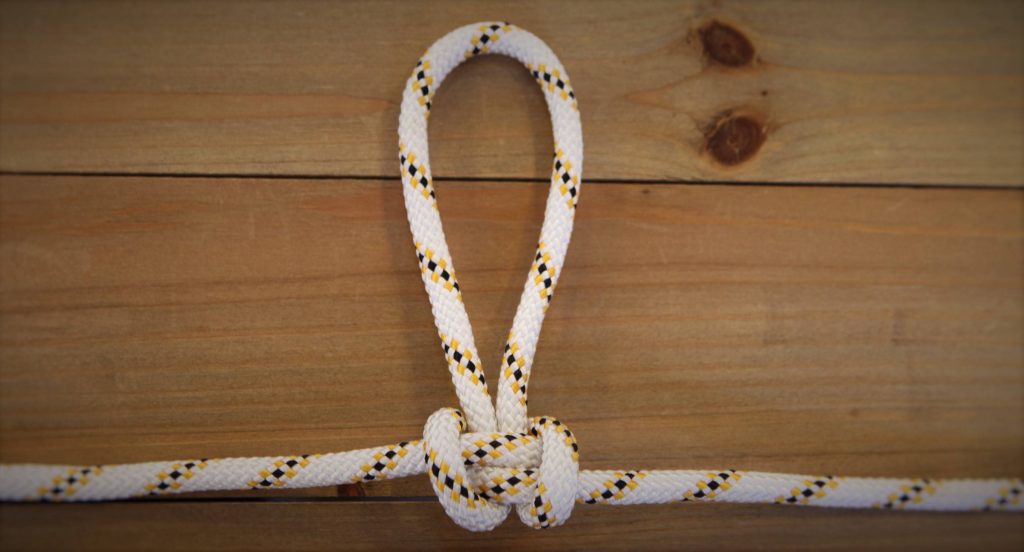
The Weaver’s Knot is not a single entity but a family of splices, each tailored to the demands of different fibers and weaving techniques. At its core, however, it is a marriage of two fundamental principles: friction and interlock. The most common variant, the weaver’s hitch, begins with a loop formed around the standing end of the thread. The working end is then threaded through this loop, pulled tight, and secured with a half-hitch or two, creating a bond that resists slippage even under the most extreme tensions. For synthetic fibers, which lack the natural grip of cotton or wool, the knot may incorporate a double fisherman’s bend, a variation that adds an extra layer of friction to prevent the splice from loosening.
But the true genius of the Weaver’s Knot lies in its adaptability. In silk weaving, where threads are as delicate as spider silk, the knot must be tied with the gentlest of hands, using a slip knot that can be undone without damaging the fiber. Conversely, in heavy-duty industrial weaving, where threads are as thick as ropes, the knot must be reinforced with a back splice, a technique that wraps the working end around the standing end multiple times before securing it. Each variation is a response to a specific challenge, a testament to the weaver’s ability to coax harmony from chaos.
The Science Behind the Knot: Why It Holds Under Pressure
To appreciate the Weaver’s Knot’s resilience, one must delve into the physics of tension and friction. When a thread is under load, the knot acts as a stress concentrator, redistributing the force across its interwoven structure. The tighter the knot, the greater the friction between the strands, and the less likely the splice is to slip. This is why experienced weavers often moisten the thread before tying the knot—water acts as a temporary lubricant, allowing the fibers to slide into place before drying and locking the splice in a vice-like grip.
Yet, the knot’s strength is not solely a product of its structure. The choice of fiber plays a critical role. Natural fibers like linen and cotton have a rough, uneven surface that grips tightly when knotted, while synthetic fibers like polyester and nylon require a different approach. For these, the knot may be reinforced with a dab of adhesive or a heat-sealed tip, transforming the splice into a near-permanent bond. In high-speed weaving, where threads are subjected to centrifugal forces that would snap weaker knots, the Weaver’s Knot’s ability to distribute stress evenly is what sets it apart from simpler splices like the overhand knot.
From Loom to Legacy: The Weaver’s Knot in Historical Context
The Weaver’s Knot is not a modern invention but a relic of ancient craftsmanship, its origins lost in the mists of time. Archaeologists have uncovered evidence of knotted threads in the ruins of Pompeii, where looms hummed in the shadow of Vesuvius. The Egyptians, too, were masters of the knot, using variations of the Weaver’s Knot to weave the linen shrouds that wrapped their pharaohs. Yet, it was in the medieval guilds of Europe that the knot truly came into its own, where master weavers passed down their techniques through generations, each adding their own refinements.
During the Industrial Revolution, the Weaver’s Knot took on new significance. As looms grew faster and more complex, the demand for reliable splices grew exponentially. The introduction of power looms in the 18th century meant that a single broken thread could halt production for hours, costing mills thousands of dollars. Weaver’s Knots became the unsung heroes of this era, ensuring that the wheels of industry kept turning. By the 20th century, the knot had evolved into a standardized technique, taught in textile schools and codified in manuals. Today, it remains a cornerstone of weaving education, a rite of passage for apprentice weavers who must prove their proficiency in tying a knot that can withstand the rigors of modern manufacturing.
The Modern Weaver’s Toolkit: Techniques for the Digital Age
In an era where looms are controlled by computer algorithms and threads are monitored by sensors, one might assume that the Weaver’s Knot has become obsolete. Nothing could be further from the truth. While automated systems can detect breaks and pause production, they cannot tie a knot. That task still falls to the human hand, or in some cases, to robotic arms programmed to mimic the dexterity of a master weaver. The techniques, however, have adapted. Today’s weavers use knot-tying jigs—small devices that hold the threads in place while the knot is tied, ensuring consistency and reducing fatigue. For high-speed applications, some mills employ ultrasonic splicers, which fuse threads together using high-frequency vibrations, creating a bond that rivals the strength of a traditional knot.
Yet, even with these advancements, the Weaver’s Knot endures. In bespoke weaving, where each piece is a work of art, the hand-tied knot is a mark of craftsmanship, a visible testament to the weaver’s skill. In industrial settings, the knot remains the first line of defense against costly downtime. And in the world of competitive weaving, where speed and precision are paramount, the ability to tie a flawless Weaver’s Knot can mean the difference between victory and defeat. The knot is a bridge between the past and the present, a reminder that even in an age of automation, some traditions are too vital to abandon.
The Unseen Challenges: When the Weaver’s Knot Fails
Of course, no knot is infallible. The Weaver’s Knot, for all its strengths, has its weaknesses. A poorly tied knot can slip under pressure, leading to a thread run—a cascade of broken ends that can halt production for hours. In the worst cases, a failed knot can cause the entire warp to collapse, forcing weavers to restart the process from scratch. To mitigate these risks, mills employ a range of strategies, from regular knot inspections to the use of knot strength testers, devices that simulate the tension of a loom to ensure the splice will hold.
Environmental factors also play a role. Humidity, for instance, can weaken natural fibers, making them more prone to slippage. Conversely, overly dry conditions can cause synthetic fibers to become brittle, increasing the risk of breakage at the knot. Weavers must constantly adapt, adjusting their techniques to account for the whims of the climate. In some cases, this means switching to a different type of knot altogether, such as the sheet bend for wet conditions or the constrictor knot for extra security.

A Knot That Binds More Than Threads
The Weaver’s Knot is more than a practical solution; it is a symbol of the weaver’s artistry and perseverance. It is a knot that has held the weight of empires, powered the Industrial Revolution, and continues to sustain the modern textile industry. In a world where speed and efficiency often overshadow tradition, the Weaver’s Knot stands as a quiet rebellion—a testament to the enduring value of craftsmanship in an age of automation.
So the next time you run your fingers over a piece of fabric, take a moment to consider the invisible threads that hold it together. Behind every seam, every weave, lies a story of resilience, of knots tied in the dark to keep the lights on. The Weaver’s Knot is not just a tool; it is a legacy, a thread that connects the past to the present, and ensures that the fabric of industry never unravels.


Leave a Comment